

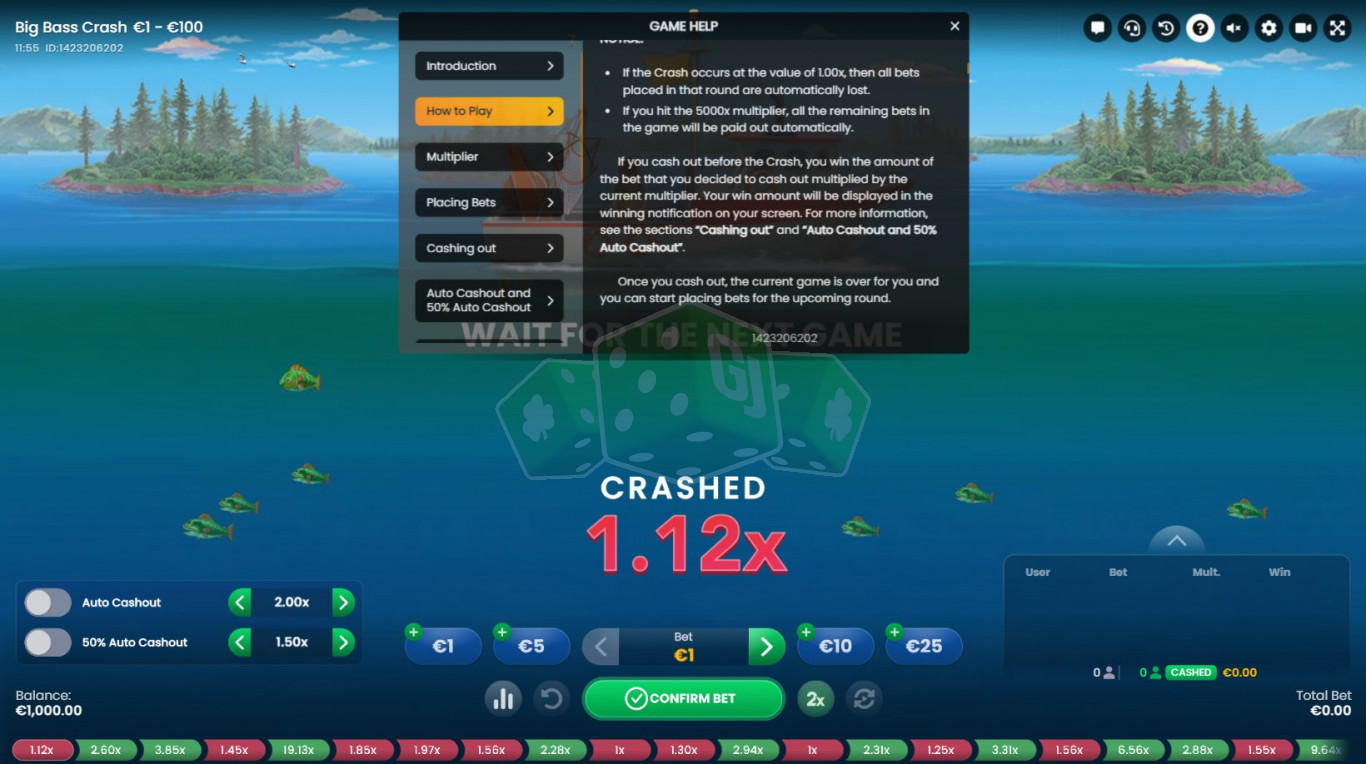
Greetings to our thorough examination into the thrilling world of the Big Bass Crash game! We’re here to investigate the exciting dynamics of risk and volatility that create this game so compelling. Understanding these concepts is essential to a more enjoyable and calculated experience. Let’s lower our lines into the mechanics and learn how to manage the potential rewards.
Comprehending Volatility in Casino-Style Games
Fluctuation, often termed variance, defines the rate and scale of potential wins. High volatility implies wins are less regular but can be bigger. Low volatility delivers more frequent, smaller wins. In Big Bass Crash, the volatility is a fundamental part of the thrill. We can view of it as the choppiness of the fishing waters, where calm periods can explode into huge catches at any moment.
This characteristic directly affects your gameplay session. A high-volatility journey like this requires a certain mindset. We prepare for stretches where the multiplier builds tension without crashing, aware a big payout could be the outcome. It’s this thrill ride of excitement that generates the game’s unique dynamic appeal and maintains us on the edge of our seats.
Comparing Volatility to Classic Slots
Traditional slot games have predetermined win frequencies via paylines and symbols. Their volatility is fixed into the math model. In Big Bass Crash, the volatility feels more dynamic and immediate. We are not waiting for reels to align; we are watching a live, escalating risk metric and choosing the outcome.
The risk profile is also different. In slots, our stake is decided, and the outcome is shown. Here, our stake is decided, but our return is partially in our hands based on timing. This moves a portion of the risk from pure chance to risk management, providing a different kind of engagement that many players find incredibly compelling.
The psychology of Payout Decisions
The instant of cashing out is a fascinating psychological event. Greed and fear clash as the multiplier climbs. Our brain’s reward centers activate, urging us to go higher, while risk-assessment zones signal to secure the win. Managing this internal conflict is part of the game’s skill.
We can develop strategies to control this, like predefined cash-out points. Deciding in advance to cash out at 2x, 5x, or 10x erases emotional decision-making in the heat of the moment. Conversely, we might use a progressive strategy, cashing out parts of our stake at different milestones. This psychological prep work improves our control.
How Crash Game Mechanics Shape Risk
The “crash” mechanic is the brilliant engine of risk in this game https://bigbasscrash.uk/. We watch a multiplier climb from 1x upwards, and we must determine when to “cash out” before it randomly crashes. The risk is completely in our timing. Wait too long, and we lose that round’s stake. Cash out too early, and we might skip a monumental multiplier.
This creates a pure, player-driven risk assessment every single round. There is no autoplay for this critical decision. We are deeply engaged, judging the rising curve, managing our gut instinct against strategic goals. This mechanic converts us from passive observers into active captains of our own fishing boat, directly steering our outcome with each click.
Examining the Big Bass Crash Game RTP
Return to Player (RTP) is a calculated percentage showing the anticipated payback over a great number of plays. While we are unable to disclose specific figures, crash games commonly feature RTPs that are comparable within the genre. This number reflects the game’s overall mathematical framework over the long term.
It’s important we realize that RTP is not a short-term guarantee. Our specific session can swing significantly above or below this average, which is where volatility shines. The RTP works in tandem with the crash randomness to ensure fairness. We appreciate this as it demonstrates the game’s outcomes are governed by a approved random number generator, ensuring every climb is uncertain.
Strategic Bankroll Management for High-Risk Play

Handling our funds is the single most important strategy for playing high-volatility games. We always set a defined budget before we begin, considering it as the cost of entertainment. We then divide this into session bankrolls, making sure a isolated streak of bad luck doesn’t end our fun prematurely. This strategy lets us weather the volatility.
We also determine on a uniform stake level relative to our bankroll. A standard approach is to stake only a minor percentage per round. This allows us to remain in the game through the unavoidable quiet periods, ready for when the big bass decide to bite. Good bankroll management converts a volatile game from a stressor into a long-lasting adventure.
Fundamental Bankroll Principles
Let’s analyze the core principles that should guide our financial approach to any volatile gaming session. These are not merely rules; they are our endurance kit for extended enjoyment and safe play. Following these can significantly improve our experience and relationship with the game’s thrilling nature.
The Percentage Betting Principle
We never stake a substantial portion of our session bankroll on a single round. Using a fixed percentage, like 1-2%, per game guarantees longevity. This method shields us during downturns and allows compound growth during winning streaks, all while crunchbase.com keeping our risk per round perfectly contained and feasible.
The Necessity of Loss Limits
Before logging in, we decide on a firm loss limit. This is the total maximum we are ready to lose during that session. Once attained, we cease playing. This hard stop stops chasing losses, a hazardous behavior that volatility can intensify. It’s our stabilizer in stormy seas.
Spotting Lucrative Multiplier Spins
Although every crash point is random, we may look for patterns in our own strategy. Some players remark that after several low multipliers, a larger one may be statistically due, though each event remains independent. The key is watching the game’s rhythm without falling for the gambler’s fallacy.
We focus on handling our reactions, not predicting the unpredictable. A high-potential round is any round we start with a clear cash-out goal and the discipline to follow it. By pairing a solid bankroll with predetermined targets, we place ourselves to capitalize on any big multiplier that comes our way, whenever it arrives.

Extended Play Considerations in Volatile Games
Engaging with a high-volatility game like Big Bass Crash over the extended period requires an modified perspective. We view our results over weeks or months, not individual sessions. This aids to smooth out the wild swings inherent to the format. Patience genuinely becomes a virtue, as does consistent record-keeping of our play.
We also periodically reassess our strategies and bankroll rules. Are they still entertaining? Are they viable? Long-term play is about pleasure, not just consequences. We ensure our approach lets us to relish the exciting climbs and dramatic crashes as entertainment, valuing the unique experience this volatility generates over time.
FAQ
What exactly is volatility within Big Bass Crash?
Volatility describes the risk and payout pattern. High volatility, as in this game, means wins can be less frequent but significantly larger. It’s the essence of the thrill, with calm periods increasing anticipation before a possible big multiplier crash, offering an exciting roller-coaster experience.
Is there a strategy to guarantee a win in Big Bass Crash?
No method guarantees a win, as the crash point is always random. However, effective strategies focus on what you can control: bankroll management and disciplined cash-out decisions. Setting loss limits and pre-deciding multiplier targets for cashing out are the best ways to manage risk and play smartly.
How does the RTP affect my individual gameplay session?
RTP is a long-term theoretical average over millions of rounds. Your individual session can, and likely will, deviate significantly from this figure due to high volatility. Think of RTP as the game’s overall framework, while your session is a single, unpredictable fishing trip within that vast ocean.
What is the ideal bankroll strategy for a new player?
Kick off by setting a firm entertainment budget you can readily afford to lose. Split it into small session bankrolls. Use only a small percentage (e.g., 1-2%) of your session fund per round. This cautious approach allows you to experience many rounds, learn the game’s rhythm, and savor the volatility without unnecessary stress.
Is it possible to predict when the game will crash?
Absolutely not. Each crash multiplier is determined instantly by a verified Random Number Generator (RNG), making every round’s outcome completely independent and unpredictable. The game is crafted for fairness, so no pattern or skill can predict the exact moment the bass will dive and end the round.
Is Big Bass Crash more about skill or luck?
The core mechanic—the random crash—is absolute luck. However, strategic play comes from handling your bankroll, taking disciplined cash-out decisions, and controlling your emotional responses. Your strategy around the luck-based event defines your long-term experience, putting it in a special category of chance-based games with strategic depth.
In conclusion, navigating the thrilling waters of Big Bass Crash with success hinges on comprehending its high-volatility nature. By embracing solid bankroll management, making calculated cash-out decisions, and embracing the random thrill of the crash mechanic, we turn raw chance into a tactical and highly entertaining experience. Bear in mind, the goal is to enjoy the ride, manage our risk, and relish every moment of the climb.